
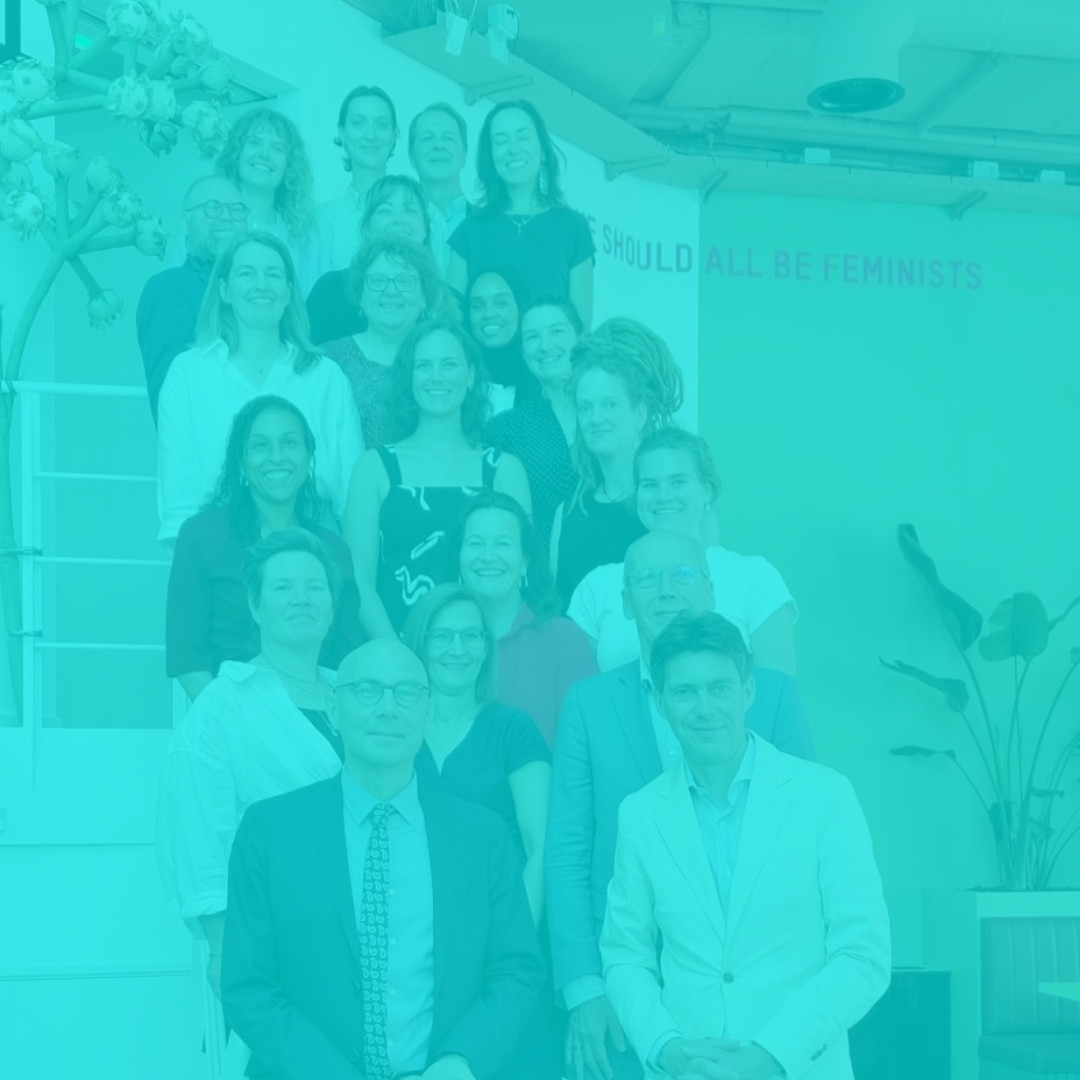
Op 24 juni 2026 spraken wij, samen met Kansfonds, in Den Haag met de VN-Hoge Commissaris voor de Mensenrechten: Volker Türk. Tijdens deze ontmoeting brachten wij de groeiende dakloosheidscrisis in Nederland onder de aandacht en benadrukten we dat dakloosheid niet alleen een sociaal vraagstuk is, maar ook een mensenrechtenkwestie. Hieronder onze volledige spreekteksten, zowel in Engels als in Nederlands.
Speech Marleen Nelisse (Hoofd Programma’s, Kansfonds)
English
Dear High Commissioner,
We as Kansfonds would like to thank you for this opportunity to speak. We are delighted to be present, but are also here to convey an alarming message about a social topic which is becoming an ever more urgent problem.
A problem that deserves to be much higher on the priority list of policymakers and politicians: homelessness. Although we live in a privileged welfare state, its benefits do not apply to everyone and this gap is growing.
More and more people in our country no longer have a home – a safe space to be yourself with dignity. Homelessness is often invisible and much closer than you might think. Contrary to common belief, most people experiencing homelessness are staying on the couch of a friend or family member, not on the streets or in shelters.
Not having a stable place to live puts your life on hold. No one can do without a home. That is why Kansfonds is working to prevent and end homelessness in the Netherlands. It may sound like a dream, but it is possible.
Kansfonds and its partners work to end homelessness through three approaches:
1. Making homelessness visible
Stigmatisation and the absence of reliable, representative data make it difficult to address homelessness effectively.
The ETHOS count helps to change this by providing policymakers and Dutch society with valuable insights that show homelessness is not a distant, abstract issue, but often something happening close to home.
The numbers are alarming — and they continue to rise. At the same time, the stigma faced by people experiencing homelessness limits understanding, reduces public support, and ultimately stands in the way of meaningful, structural solutions.
2. Preventing homelessness
Ending homelessness also means preventing people from becoming homeless. Kansfonds focuses primarily on young people, because in this phase of life even a relatively small financial problem can escalate quickly.
Without a safety net or support network to fall back on, this can ultimately lead to homelessness, with consequences that last a lifetime.
3. Solving homelessness by creating places to live
And finally, homelessness is not primarily a care issue — it is, first and foremost, a housing issue. Therefore, if we want to end homelessness, we need to start by providing people with a home. Together with our partners, Kansfonds aims to create exactly these kinds of housing solutions.
As said, it may sound like a dream – ending homelessness – but it is possible. Yet we cannot do this alone. We need collaborations with partners such as Dakloosheid Voorbij! and their strong voice towards politicians in The Hague.
But we need more. As a funding partner of Dakloosheid Voorbij!, Kansfonds firmly advocates strong action by our national government to prevent and end homelessness in the Netherlands, ideally by 2030.
Yet greater investment, change and concrete steps from the Dutch government are highly needed.
Our question for the High Commissioner is therefore: What concrete steps does the High Commissioner recommend to the Dutch government to close the gap between its international human rights obligations on housing and the right to a dignified life, and the reality faced by people experiencing homelessness today?
Nederlands
Geachte Hoge Commissaris,
Namens Kansfonds willen wij u bedanken voor deze gelegenheid om het woord te voeren. We zijn blij hier aanwezig te zijn, maar komen ook met een zorgwekkende boodschap over een maatschappelijk probleem dat steeds urgenter wordt.
Een probleem dat veel hoger op de agenda van beleidsmakers en politici zou moeten staan: dakloosheid. Hoewel wij in een welvarende verzorgingsstaat leven, profiteert niet iedereen daarvan en wordt deze kloof steeds groter.
Steeds meer mensen in ons land hebben geen thuis meer – geen veilige plek waar zij met waardigheid zichzelf kunnen zijn. Dakloosheid is vaak onzichtbaar en dichterbij dan veel mensen denken. In tegenstelling tot wat vaak wordt aangenomen, verblijven de meeste dakloze mensen niet op straat of in de opvang, maar bij vrienden of familie op de bank.
Geen stabiele woonplek hebben zet je leven stil. Niemand kan zonder een thuis. Daarom werkt Kansfonds aan het voorkomen en beëindigen van dakloosheid in Nederland. Dat klinkt misschien als een droom, maar het is mogelijk.
Kansfonds werkt vanuit drie benaderingen:
1. Dakloosheid zichtbaar maken
Stigmatisering en het ontbreken van betrouwbare en representatieve gegevens maken het moeilijk om dakloosheid effectief aan te pakken.
De ETHOS-telling helpt dit te veranderen door beleidsmakers en de Nederlandse samenleving waardevolle inzichten te bieden. Daarmee wordt zichtbaar dat dakloosheid geen ver weg of abstract probleem is, maar vaak iets dat zich dicht bij huis afspeelt.
De cijfers zijn zorgwekkend en blijven stijgen. Tegelijkertijd beperkt het stigma waarmee dakloze mensen te maken krijgen het begrip voor hun situatie, vermindert het het maatschappelijk draagvlak en staat het structurele oplossingen in de weg.
2. Dakloosheid voorkomen
Dakloosheid beëindigen betekent ook voorkomen dat mensen dakloos worden. Kansfonds richt zich daarbij vooral op jongeren, omdat in deze levensfase zelfs een relatief klein financieel probleem snel kan escaleren.
Zonder vangnet of steunnetwerk kan dit uiteindelijk leiden tot dakloosheid, met gevolgen die een leven lang kunnen doorwerken.
3. Dakloosheid oplossen door woningen te creëren
Tot slot: dakloosheid is in de eerste plaats geen zorgvraagstuk, maar een woonvraagstuk. Als we dakloosheid willen beëindigen, moeten we beginnen met mensen een woning te bieden. Samen met onze partners werkt Kansfonds aan dergelijke woonoplossingen.
Zoals gezegd klinkt het misschien als een droom om dakloosheid te beëindigen, maar het is mogelijk. Toch kunnen we dit niet alleen. We hebben samenwerking nodig met partners zoals Dakloosheid Voorbij! en hun krachtige stem richting de politiek in Den Haag.
Maar er is meer nodig. Als inhoudelijke en financieringspartner van Dakloosheid Voorbij! pleit Kansfonds voor stevige maatregelen van de landelijke overheid om dakloosheid te voorkomen en te beëindigen, bij voorkeur uiterlijk in 2030.
Daarvoor zijn echter meer investeringen, verandering en concrete stappen van de Nederlandse overheid noodzakelijk.
Onze vraag aan de Hoge Commissaris is daarom: welke concrete stappen adviseert u de Nederlandse overheid te zetten om de kloof te dichten tussen haar internationale mensenrechtenverplichtingen op het gebied van huisvesting en een menswaardig bestaan, en de werkelijkheid waarmee mensen die dakloos zijn dagelijks worden geconfronteerd?
Speech Geert Ritsema (Dakloosheid Voorbij!)
English
Dear Mister Türk,
My colleague Marleen has just painted a grim but realistic picture of the growth of homelessness in the Netherlands. This is not a natural disaster, but the consequence of political choices made by several Dutch governments over the last few decades, and especially during the last ten years.
While home ownership is generously subsidised through tax reduction policies — costing the Dutch state around 11 billion euros per year — social housing programmes face systematic budget cuts.
As many people cannot, despite all these subsidies, afford to buy a house, and because there is a large and growing shortage of affordable social housing, the result is increasing homelessness. Today, homelessness can happen to almost anybody in the Netherlands, including people with good jobs, families with children and entrepreneurs.
Following European policies, the Dutch government has declared in its National Homelessness Plan that eradicating homelessness by 2030 is a key objective. However, the measures needed to achieve this goal are far from sufficient, as has been demonstrated by a recent research report commissioned by the government itself.
In the vision of Dakloosheid Voorbij!, the basic problem is that homelessness is still primarily treated by both national and local governments as a care issue: an individual problem for which homeless people themselves are held responsible.
There is hardly any recognition of the fact that homelessness is a human rights issue. The right to housing is not enforceable under Dutch law, and even the Convention on the Rights of the Child is not adequately reflected in national policies and legislation.
For example, the new Housing Act (Wet versterking regie volkshuisvesting), which was approved by the Dutch Senate just yesterday, does little to guarantee adequate housing for homeless families with minor children. This has been heavily criticised not only by Dakloosheid Voorbij!, but also by the Dutch branch of the Salvation Army and the Netherlands Institute for Human Rights.
We appeal to you, Mr Türk, as the UN High Commissioner for Human Rights, to use your influence on the Dutch government to strengthen the call for better enforcement of human rights in the field of housing, and in particular to promote these rights in the face of growing homelessness in the Netherlands.
We are very interested in hearing what possibilities you see for the Office of the High Commissioner for Human Rights to intervene and to make clear to the Dutch government that the homelessness crisis constitutes a violation of human rights.
Nederlands
Geachte heer Türk,
Mijn collega Marleen heeft zojuist een somber maar realistisch beeld geschetst van de groeiende dakloosheid in Nederland. Dit is geen natuurramp, maar het gevolg van politieke keuzes die door opeenvolgende Nederlandse regeringen zijn gemaakt, vooral in de afgelopen tien jaar.
Terwijl woningbezit ruim wordt gesubsidieerd via fiscale regelingen — die de Nederlandse staat jaarlijks ongeveer 11 miljard euro kosten — worden sociale woningbouwprogramma’s stelselmatig gekort.
Veel mensen kunnen ondanks al deze subsidies geen woning kopen, terwijl het tekort aan betaalbare sociale huurwoningen groot is en blijft groeien. Het gevolg is een toename van dakloosheid. Tegenwoordig kan vrijwel iedereen in Nederland ermee te maken krijgen, ook mensen met een goede baan, gezinnen met kinderen en ondernemers.
In navolging van Europees beleid heeft de Nederlandse overheid in het Nationaal Actieplan Dakloosheid uitgesproken dat dakloosheid in 2030 moet zijn beëindigd. De maatregelen om dat doel te bereiken zijn echter verre van voldoende, zoals ook blijkt uit recent onderzoek dat door de overheid zelf is laten uitvoeren.
Volgens Dakloosheid Voorbij! ligt het kernprobleem daarin dat dakloosheid nog steeds vooral wordt gezien als een zorgvraagstuk: een individueel probleem waarvoor dakloze mensen zelf verantwoordelijk worden gehouden.
Er is nauwelijks erkenning voor het feit dat dakloosheid een mensenrechtenkwestie is. Het recht op huisvesting is in Nederland niet afdwingbaar en zelfs het Kinderrechtenverdrag wordt onvoldoende toegepast in nationale wetgeving en beleid.
Een voorbeeld daarvan is de Wet versterking regie volkshuisvesting, die gisteren door de Eerste Kamer is aangenomen. Deze wet biedt onvoldoende garanties op passende huisvesting voor dakloze gezinnen met minderjarige kinderen. Dat is niet alleen bekritiseerd door Dakloosheid Voorbij!, maar ook door het Nederlandse Leger des Heils en het College voor de Rechten van de Mens.
Wij doen daarom een beroep op u, meneer Türk, om uw invloed als VN-Hoge Commissaris voor de Mensenrechten aan te wenden om de Nederlandse overheid aan te sporen mensenrechten op het gebied van huisvesting beter te waarborgen, en deze rechten nadrukkelijk te verdedigen in het licht van de groeiende dakloosheid in Nederland.
Wij horen graag welke mogelijkheden u ziet voor het Bureau van de Hoge Commissaris voor de Mensenrechten om hierin een rol te spelen en de Nederlandse overheid erop te wijzen dat de huidige dakloosheidscrisis een schending van mensenrechten vormt.